
Quickstart
Understand the Big Picture
See how daily work connects to organizational outcomes
In complex organizations, work does not exist in isolation. Tasks belong to projects, projects belong to initiatives, and initiatives serve strategic goals. The problem is not that this structure doesn’t exist — the problem is that most people cannot see it.
KanBo provides a shared map of work
Like a city transit map or an atlas, it shows:
- where you are,
- how different areas connect,
- and how local movement contributes to the overall system.
This allows individuals to focus on their tasks without losing sight of why the work matters — and allows leaders to understand progress without drilling into every detail.
How KanBo represents the big picture
KanBo organizes work in a layered structure that reflects how modern organizations actually operate:
| KanBo Element | What It Represents | Organizational Meaning |
| Workspace | A strategic container. | A business domain or organizational area (e.g., Finance, Operations, R&D) |
| Space | A focused work environment. | A project, process, or initiative |
| Card | A unit of execution. | A task, deliverable, or issue |
| View | A lens on work. | Progress tracking, timelines, risks, or performance insight. |
Each level serves a different purpose — but they always remain connected.
- Workspaces provide strategic orientation.
- Spaces translate intent into coordinated activity.
- Cards represent real work being done.
- Space Views allow different roles to see the same work from the perspective they need.
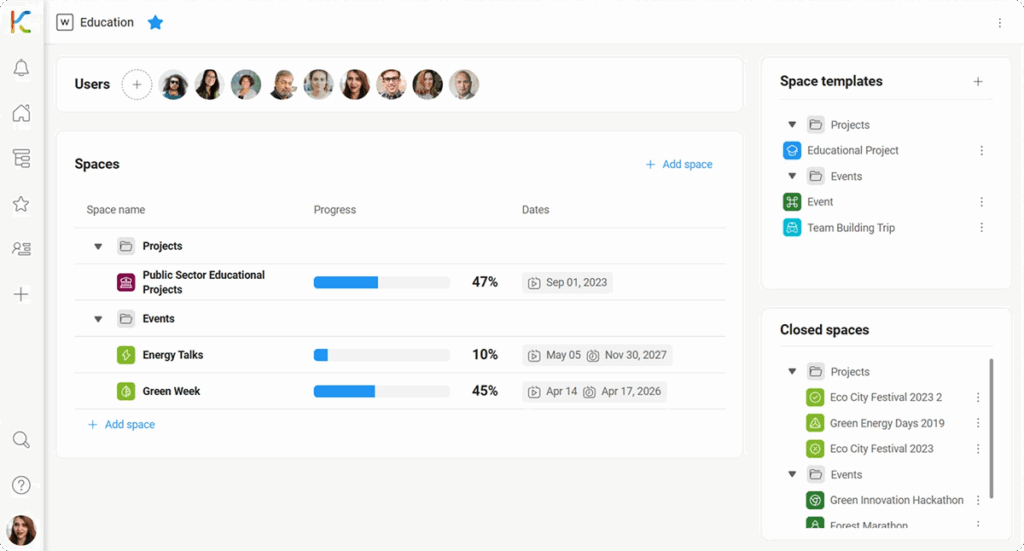
Workspaces
Workspaces are the main organizing element of the KanBo hierarchy. They provide a clear overview of the organizational structure. Workspaces are the broadest containers that separate different areas of work, such as different teams or clients.
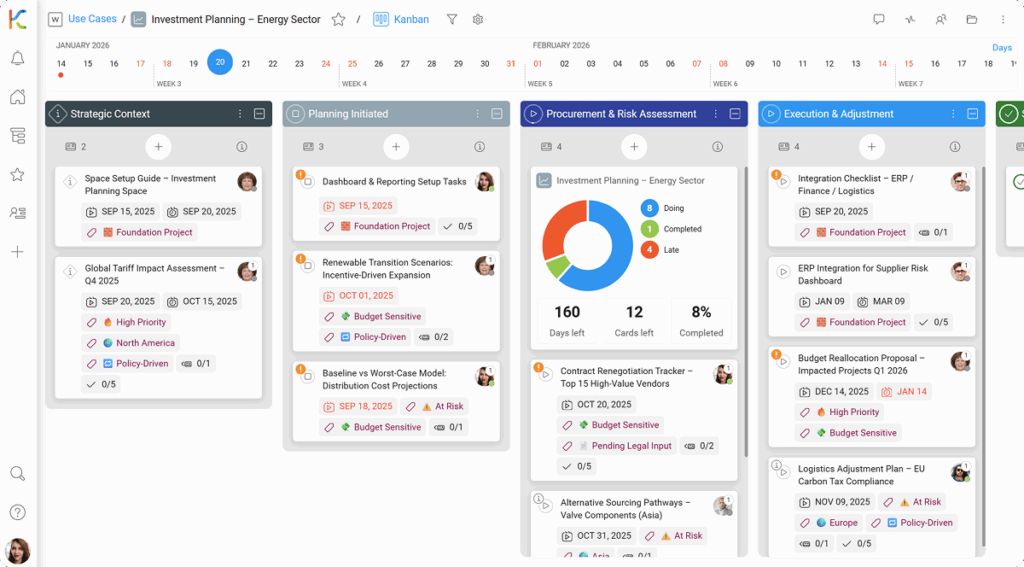
Spaces
Spaces are collections of cards arranged in a highly customized way. They provide a visual representation of workflow and allow users to manage and track tasks. They typically represent projects, teams, or specific areas of focus.
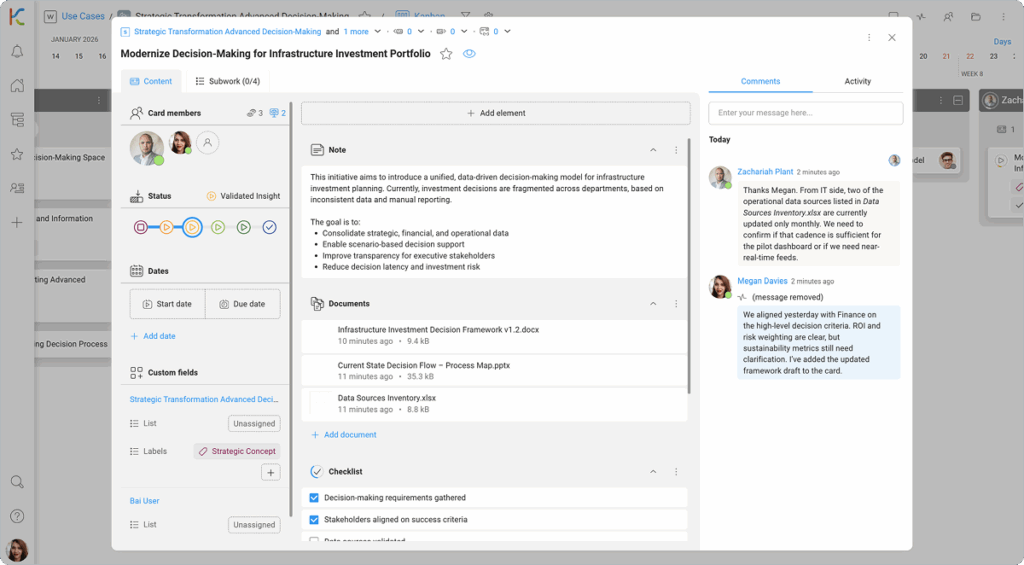
Cards
Cards are the most fundamental units of KanBo and contain information created with notes, files, comments, dates, checklists, and other data relevant to the task at hand. Their extensive structure will allow you to adapt them to any situation.
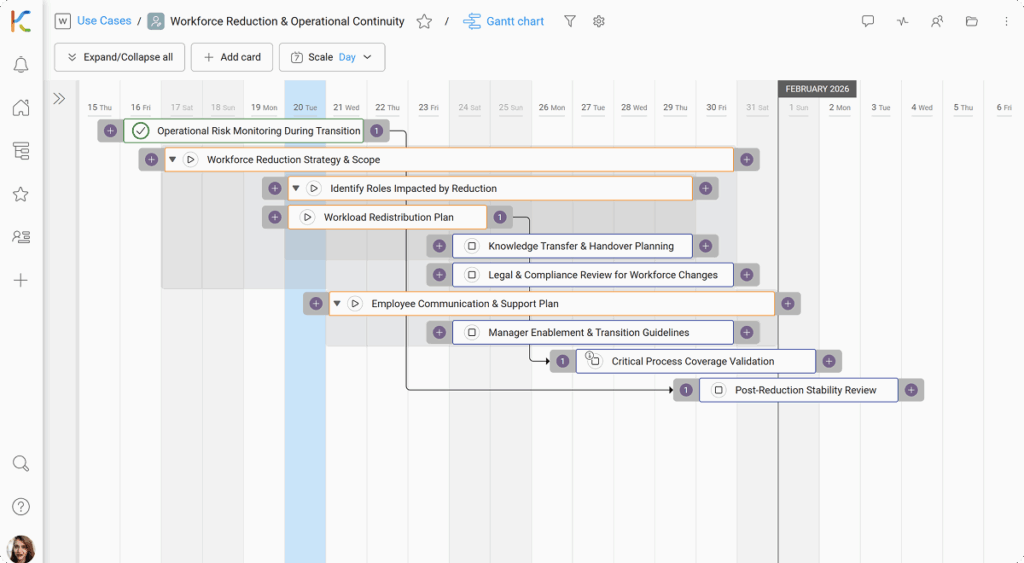
Space views
The space view is a visual representation of the contents of a space. It allows you to present the same cards arranged in different ways, depending on what you need at the time. For example, a space view can look like a calendar, a table, or a mind map.
One structure, many perspectives
Not everyone needs the same level of detail.
KanBo allows:
- executives to move across workspaces and see how initiatives progress,
- managers to navigate between spaces and understand dependencies,
- teams to focus on execution inside a space,
- individuals to work on cards while staying connected to the bigger context.
Just like a metro map:
- you can zoom out to understand the entire system,
- or zoom in to navigate your next stop.
Both views are always part of the same map.
Different perspectives, same tools
Everyone works in the same system — with different perspectives, not different tools.
| KanBo Element | Purpose | User |
| Workspace: Marketing Department | Represents the strategic domain where all marketing initiatives live. | A designer working on the brochure sees their task. |
| Space: Q4 Product Launch Campaign | A focused environment coordinating activities for a specific outcome. | A campaign manager sees how all deliverables come together. |
| Card: Design brochure draft | A concrete piece of work that contributes directly to the campaign’s success. of execution. | A marketing director sees how the campaign supports broader business goals. |
Why this matters
When people cannot see the big picture:
- work becomes fragmented,
- priorities conflict,
- progress is reported instead of understood,
- and strategy drifts away from execution.
KanBo restores orientation. It allows organizations to move through complex work landscapes with clarity — ensuring that daily actions, projects, and strategic goals remain aligned over time.
Understanding the big picture is not about seeing everything. It is about always knowing where you are, where you are going, and how your work contributes to the result.