
Quickstart
Collaborate and Communicate
Collaborate where the work happens — securely, intentionally, and in context
In KanBo, collaboration is not an informal exchange of messages. It is a structured interaction around work, governed by roles, visibility, and responsibility.
This makes collaboration scalable, auditable, and safe — even in complex enterprise environments.
Collaboration is defined by access, not by messages
Collaboration in KanBo starts with who is allowed to see and participate.
At the workspace and space level, users are assigned roles that define visibility and permissions:
| Assigned roles | Visibility and permissions |
| Owner | Has full control over structure, membership, and configuration. |
| Member | Actively participates in work, creates and updates Cards. |
| Visitor | Has read-only access, allowing visibility without execution rights. |
This ensures that collaboration always happens within a controlled boundary. Only the right people can see the work — and only the right people can change it.
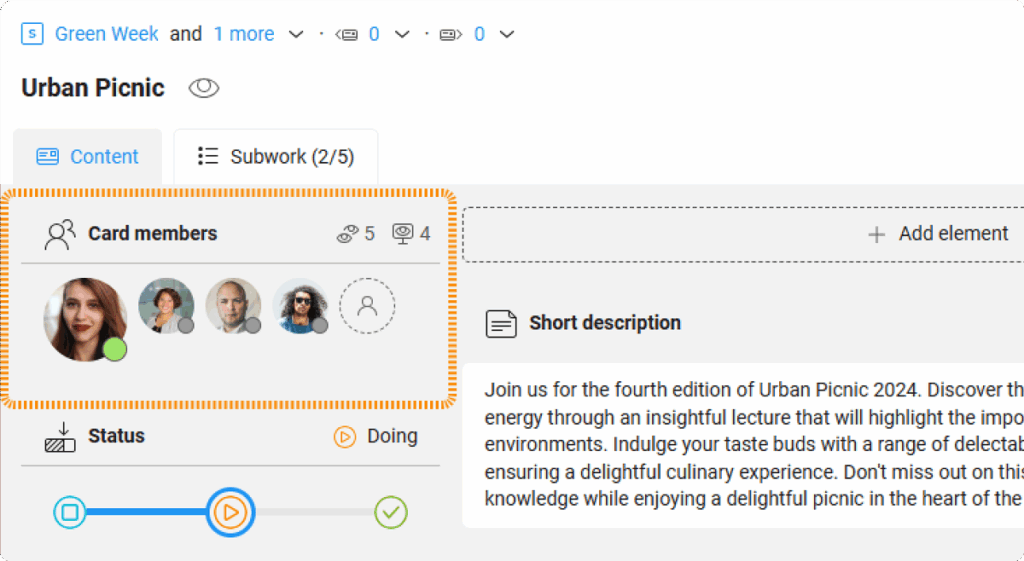
Card members
Card members are users assigned to cards. Assigning users allows you to delegate tasks and ensure that everyone knows their responsibilities.
Collaboration becomes precise at the card level
At the Card level, collaboration is refined further through card members:
| Progress signals | Use |
| Responsible person | Owns the outcome and is accountable for moving the card to Completed. |
| Co-workers | Actively contribute to execution. |
| Other visible members (followers and viewers) | Can follow the work, read updates, and stay informed without direct involvement. |
This makes responsibility explicit and prevents confusion about who drives the work — while still allowing transparency.
Reading work is already collaboration
In KanBo, collaboration does not require speaking.
When a user opens a card and reads it:
- by taking responsibility,
- with a clear outcome in mind,
- and in the place where your role naturally belongs.
This visibility replaces many meetings, emails, and status calls.
Information does not need to be requested — it is already shared.
Communication is embedded in execution
When communication is needed, it happens directly on the work:
- users add comments to cards,
- mention other users to involve them precisely,
- mention other cards to reference related work, dependencies, or decisions.
This turns communication into a structural element of execution:
- no messages without context,
- no references without visibility,
- no attention without purpose.
KanBo does not support broadcast noise. It supports targeted interaction that moves work forward.
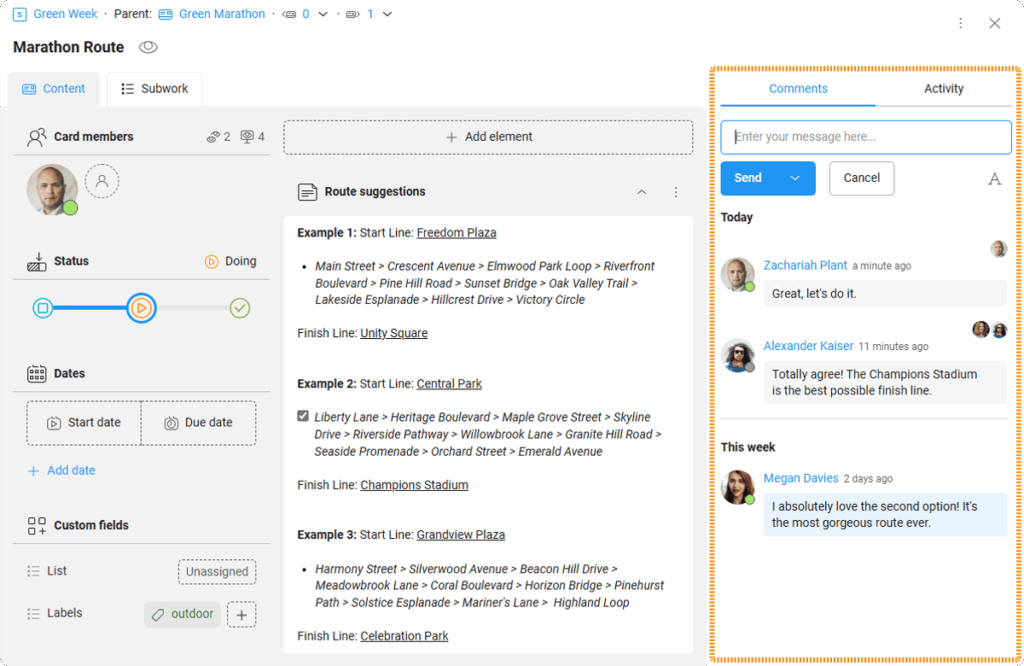
Messages
Messages in cards are a great way to collaborate with other KanBo users. They’re perfect for short conversations about card content. Use them to let your colleagues know about the latest news or ask for help.
Activity Stream ensures traceability and trust
All collaboration is recorded in the Activity Stream:
- comments and mentions,
- changes in responsibility,
- status transitions,
- document actions.
This creates a transparent, chronological record of how work evolved — supporting governance, compliance, and shared understanding.
Nothing important happens outside the system.
Why this matters
KanBo treats collaboration as a core operational capability, not a communication add-on — enabling organizations to work together confidently, securely, and at scale.
| Tools | Outcome |
| In traditional tools: | collaboration is scattered, access is implicit, and context is fragile. |
| In KanBo: | collaboration is structured, access is explicit, and context is preserved. |
Natural transition
With people collaborating safely and contextually, the next step is ensuring that documents and knowledge are managed with the same discipline and visibility.