
Quickstart
Start Your Work
Start work with context — and with the intention to finish
In KanBo, starting work is not a single action. It is a combination of intent, context, and entry point.
You start:
- by taking responsibility,
- with a clear outcome in mind,
- and in the place where your role naturally belongs.
Start in the right place
KanBo allows users to enter work at different levels of the system. Each entry point provides a different perspective — but always within shared context.
| Starting point | Purpose | Actions |
| MySpace: focus on what matters to you | For individual contributors, the most natural starting point is MySpace. | cards you are responsible for, work where your input is needed, deadlines and priorities without searching. |
| Space: understand the whole initiative | When your responsibility extends beyond individual tasks, you start in a space. | see how work is distributed, understand dependencies and flow, coordinate people and timing. |
| Card: execute a concrete piece of work | Sometimes work starts with a single responsibility. | understanding the goal of the task, seeing related documents, discussions, and dependencies, moving the work toward completion. |
| Template: reuse what already works | Starting from a Template means starting with experience embedded. | create spaces or cards with predefined structure, inherit workflows that already lead to completion, align instantly with organizational standards. |
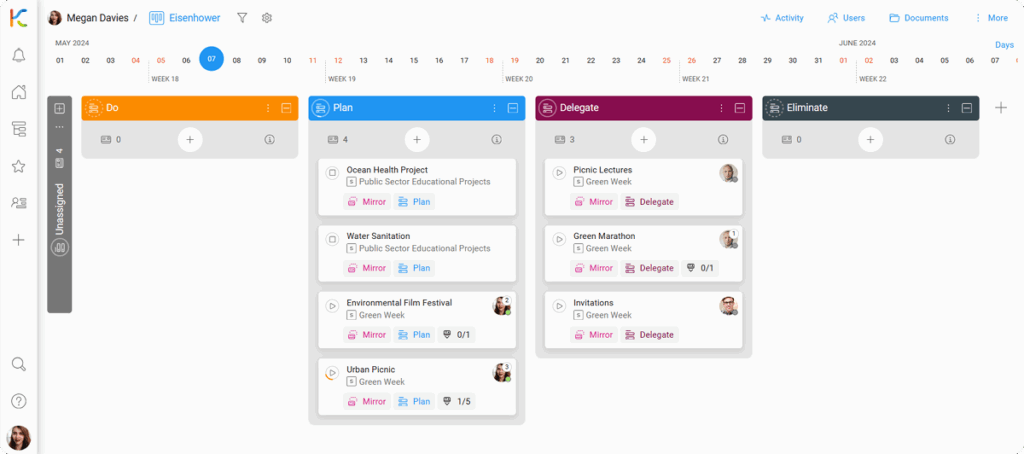
MySpace
MySpace is automatically created personal space. It allows you to view selected cards from the entire KanBo within a single space. MySpace uses mirror cards from other spaces to visualize your individual stream of work.
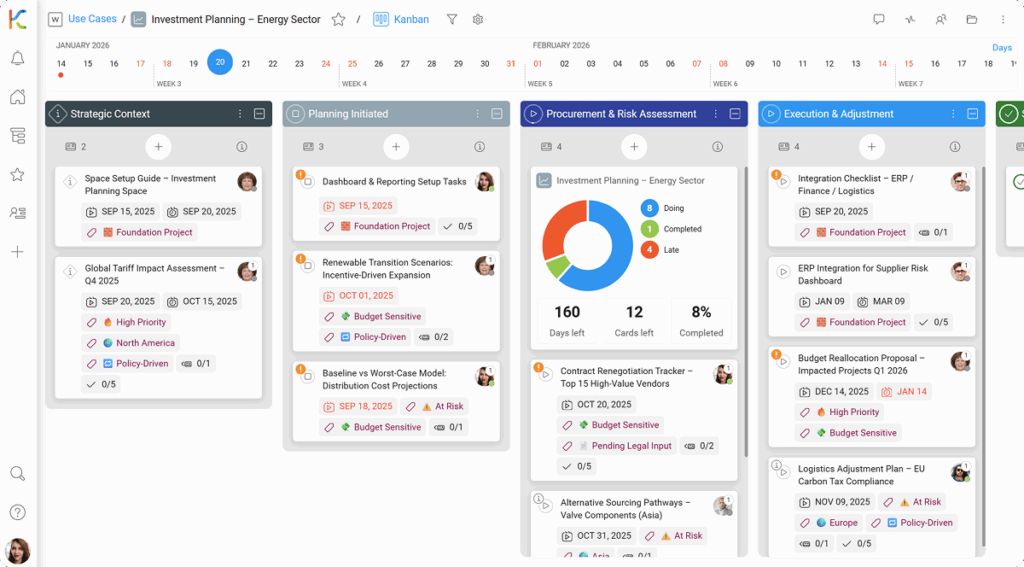
Spaces
Spaces are collections of cards arranged in a highly customized way. They provide a visual representation of workflow and allow users to manage and track tasks. They typically represent projects, teams, or specific areas of focus.
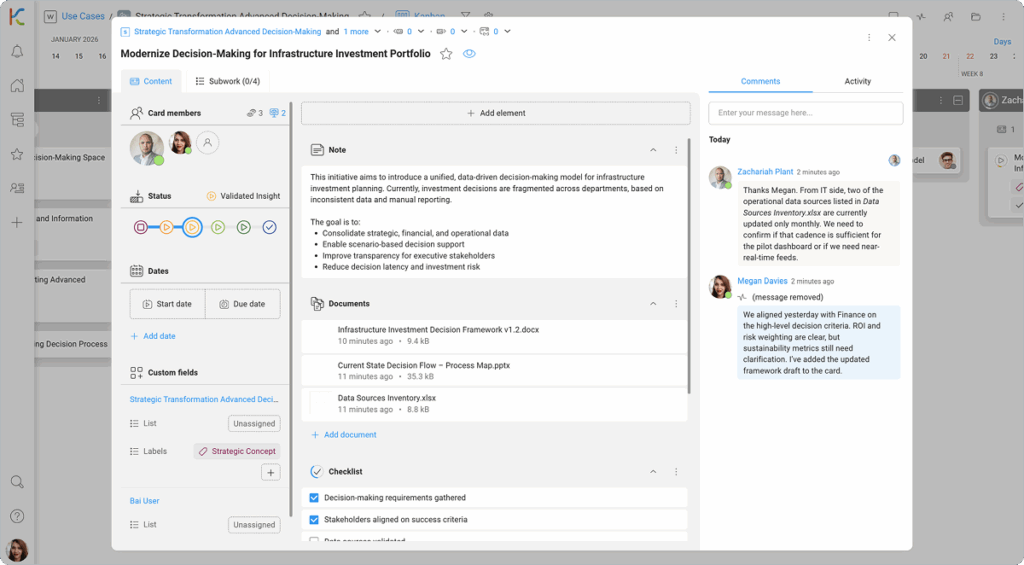
Cards
Cards are the most fundamental units of KanBo and contain information created with notes, files, comments, dates, checklists, and other data relevant to the task at hand. Their extensive structure will allow you to adapt them to any situation.
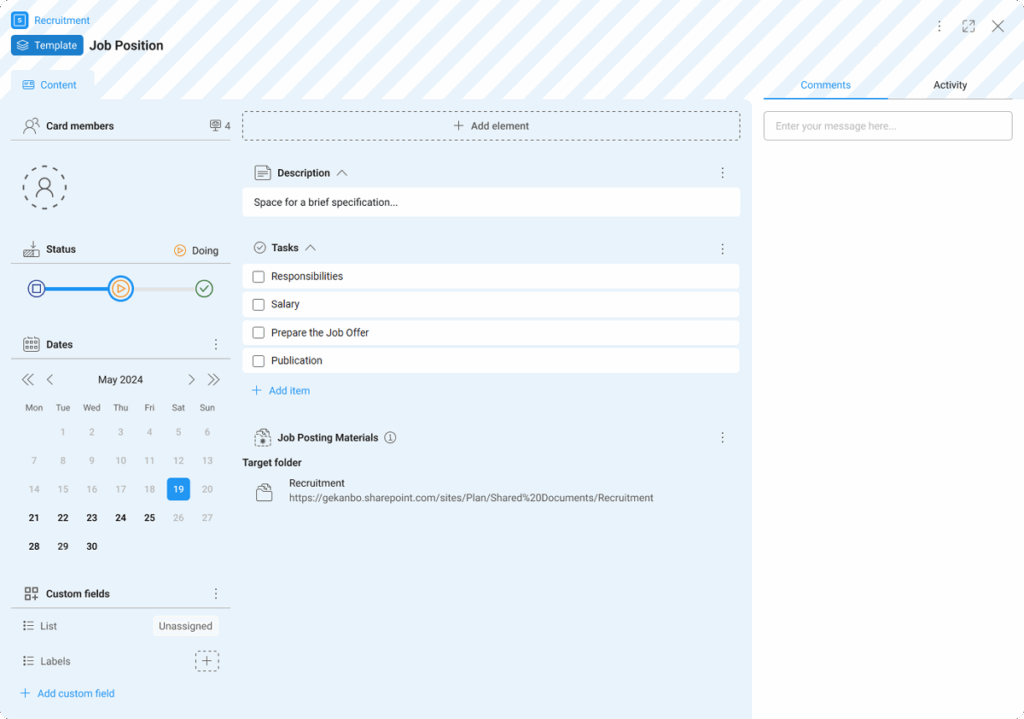
Card templates
A card template is a feature that allows you to create many cards based on one model card. Don’t start from scratch every time. Using the card template, you can define default card elements and details for new cards.
Start by creating structure — when it is your role
For leaders, administrators, or process owners, work may start at a higher level.
This includes:
- creating a new workspace,
- creating or configuring a space,
- defining workflows and views.
This is not about configuration for its own sake.
It is about preparing the context in which others can work effectively and finish reliably.
One system, many starting points
All starting points lead into the same system:
- shared context,
- visible progress,
- clear ownership,
- and defined completion.
KanBo does not force everyone to start in the same place. It ensures that wherever you start, you are always connected to the bigger picture and the final outcome.
Starting work in KanBo means entering the organization’s living map of execution — at the level that fits your role.